Meta Muse Spark Developer Guide 2026: Benchmarks, Modes, API
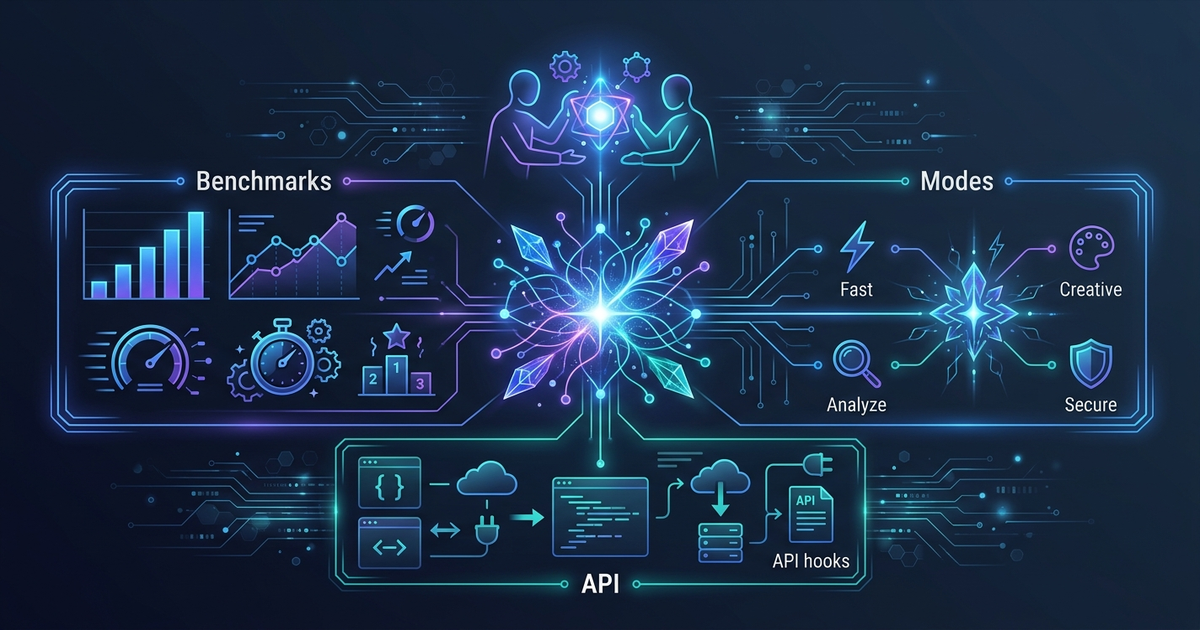
Meta launched Muse Spark on April 8, 2026 — the first model from Meta Superintelligence Labs (MSL), and the company's most deliberate signal yet that it is playing to win in the closed-model frontier AI race. Led by Alexandr Wang, who joined as Meta's first-ever chief AI officer after Meta acquired a 49% stake in Scale AI for $14.3 billion, MSL was built from scratch to compete directly with OpenAI, Anthropic, and Google.
For developers, Muse Spark raises three immediate questions: How does it actually perform? What can you do with it right now? And what does Meta's pivot away from open-source mean for teams that built on Llama? This guide answers all three with the latest verified data.
Why This Matters for Developers
Meta's Llama series defined the open-weight AI movement from 2023 through 2025. Hundreds of thousands of developers, startups, and enterprises built on Llama models precisely because they could run them locally, fine-tune them freely, and avoid vendor lock-in. Muse Spark marks the first time Meta has shipped a frontier model it will not release as open weights — at least initially.
This is not a minor release. Muse Spark now powers Meta AI across the company's consumer platforms, replacing the Llama-backed stack that previously ran the chatbot experience. Meta has confirmed plans to release an open-weight version of the Muse series eventually, but the timeline is unspecified.
If you are evaluating frontier models for production use, Muse Spark enters the picture as a serious competitor in health, science, and multimodal reasoning — with real weaknesses in coding and agentic tasks that you need to understand before committing.
What Is Meta Superintelligence Labs?
Meta Superintelligence Labs is a newly created internal AI research group, announced alongside the Muse Spark launch. Wang leads it as chief AI officer, reporting directly to Mark Zuckerberg. The lab operates with the explicit mandate to build proprietary frontier models competitive with GPT-5.4, Gemini 3.1, and Claude Opus 4.6.
Muse Spark (code-named Avocado internally) is MSL's inaugural release. It was built on an entirely new model stack — not a continuation of the Llama architecture — which explains why Meta chose to keep the weights proprietary. The architectural innovations are the primary competitive asset the lab wants to protect.
Muse Spark's Two Reasoning Modes
Muse Spark ships with two distinct inference modes that developers need to understand to use it effectively.
Instant Mode
Instant is the default mode for standard requests. It behaves like a conventional frontier chat model: fast responses, no extended reasoning chain, appropriate for conversational tasks, simple Q&A, image analysis, and basic document processing. Latency is competitive with GPT-5.4 Turbo and Claude Sonnet 4.6 in this mode.
Contemplating Mode
Contemplating mode is Muse Spark's architectural differentiator. Rather than scaling compute by making a single model think longer — the approach used by OpenAI's o-series and Anthropic's extended thinking — Contemplating mode spins up multiple reasoning sub-agents working in parallel, then synthesizes their outputs into a single response.
Meta's argument is that this produces comparable results to sequential extended reasoning with lower end-to-end latency, because sub-agents can explore different solution paths simultaneously rather than serially. The trade-off is higher token consumption per request and greater infrastructure cost on Meta's side.
Developers evaluating this for production use cannot directly invoke Contemplating mode via API yet — API access is still in private preview — but it is accessible through the Meta AI consumer interface.
| Dimension | Instant Mode | Contemplating Mode |
|---|---|---|
| Reasoning depth | Standard | Extended (multi-agent parallel) |
| Best for | Conversational tasks, fast queries | Hard science, math, complex analysis |
| Latency | Low (~2-4s) | Higher (~15-45s) |
| Token efficiency | High | Lower (parallel agent overhead) |
| Use case | Most API integrations | Research, medical reasoning, HLE-class tasks |
Benchmark Performance: Where Muse Spark Wins and Loses
Meta published benchmark results at launch, and independent evaluation firms have since validated many of them. The picture is nuanced: Muse Spark leads the field on specific scientific and medical benchmarks but trails meaningfully on coding and agentic tasks.
Overall Intelligence Index
Artificial Analysis placed Muse Spark fourth on their Intelligence Index v4.0:
| Model | Score |
|---|---|
| Gemini 3.1 Pro Preview | 57 |
| GPT-5.4 | 57 |
| Claude Opus 4.6 | 53 |
| Muse Spark | 52 |
| GLM-5.1 | 49 |
Fourth place among frontier models is a credible result for a first release. More interesting is Muse Spark's token efficiency: it used 58 million output tokens to complete the Intelligence Index benchmark, comparable to Gemini 3.1 Pro (57M), and dramatically lower than Claude Opus 4.6 (157M) and GPT-5.4 (120M). Token efficiency matters directly for inference cost at scale.
Where Muse Spark Leads
Health and medical reasoning: HealthBench Hard — a benchmark testing medical knowledge, clinical reasoning, and health information synthesis — Muse Spark scores 42.8 versus GPT-5.4's 40.1. This is the most significant lead Muse Spark holds over the field.
Scientific frontier reasoning: HLE (Humanity's Last Exam) in Contemplating mode: 50.2%, above GPT-5.4 Pro at 43.9%. HLE tests graduate-level scientific problems across physics, chemistry, biology, and mathematics.
Chart and visual understanding: CharXiv 86.4 — first place. CharXiv tests understanding of complex scientific charts and figures, a capability that is particularly valuable for data analysis workflows.
Multimodal understanding: MMMU-Pro score of 80.5%, ranking second globally behind Gemini 3.1 Pro at 82.4%. See our Gemini 3.1 Ultra guide for comparison context.
Where Muse Spark Trails
Coding: Terminal-Bench 59.0 versus GPT-5.4's 75.1. A 16-point gap in coding benchmark performance is large. Developers using frontier models primarily for code generation or review should treat this as a significant limitation. For coding-first workflows, GPT-5.4 or Claude Opus 4.6 remain stronger choices.
Abstract reasoning: ARC-AGI-2 score of 42.5 versus the top performer at 76.1. This suggests limitations in novel problem types that require generalizing from few examples.
Agentic tasks: GDPval-AA ELO rating of 1,444 versus 1,672 for the top agentic model. Muse Spark is not the right choice for multi-step tool-use pipelines yet — a category where Grok 4's multi-agent architecture and OpenAI's Agents SDK excel.
Multimodal Capabilities and Context Window
Muse Spark accepts text, image, and voice inputs in its current form. Output is text-only — the model does not generate images or audio. This is a meaningful limitation compared to GPT-5.4's native multimodal generation and Gemini 3.1's native image output.
The context window is 262,144 tokens (approximately 262K). This is substantially smaller than Gemini 3.1 Ultra's 2 million tokens or the context windows now available from frontier models, but it is sufficient for most document analysis, code review, and research tasks.
Meta AI integration is already live across:
- Meta AI web interface and desktop app
- Meta AI mobile app
- Meta smart glasses (Ray-Ban Meta)
Consumer rollout to Facebook, Instagram, Messenger, and WhatsApp is in progress. A Shopping Mode feature is also launching: it combines Muse Spark's language capabilities with data from creators users follow to generate product recommendations and styling suggestions.
API Access: Current Status
This is the part developers care most about. As of April 2026, there is no public Muse Spark API.
Meta has confirmed a private preview program for select partners, with priority given to organizations in:
- Healthcare and medical research
- Education institutions
- Enterprise research partnerships
No pricing has been announced. No public access date has been confirmed. Meta has stated that access will expand in phases, but did not provide a timeline.
What this means practically: If you are building a product today that needs Muse Spark capabilities, you are blocked unless you are a selected preview partner. The model is only accessible through the Meta AI consumer interface.
If you need API access to a frontier-level model now, the current options are:
- Claude Mythos via Project Glasswing (gated preview)
- GPT-5.4 via the OpenAI API
- Gemini 3.1 Pro via Google AI Studio
- GLM-5.1 744B open-source for self-hosted deployment
The Open-Source Strategy Shift
For context on why this matters: Meta's Llama models were the foundation of the modern open-weight LLM ecosystem. Llama 2, Llama 3, and Llama 4 Scout and Maverick are still available on Hugging Face and remain fully operational for teams using them. Nothing has changed operationally for teams running Llama in production.
The shift is strategic and forward-looking: future MSL frontier models will be closed first. Meta has indicated intent to open-source future Muse series models eventually, framing it as a "closed-first, open-later" strategy similar to how some research labs operate. Wang has described MSL as a "counterweight to Anthropic and OpenAI" — a framing that positions proprietary Muse models as Meta's competitive frontier, with Llama serving the open ecosystem in parallel.
- Top-tier health and medical reasoning (HealthBench Hard #1)
- Outstanding chart and scientific visual understanding (CharXiv #1)
- Token-efficient: 58M vs competitors' 120-157M for same benchmark
- Genuine multimodal input (text + image + voice)
- Contemplating mode offers a novel parallel-agent approach to hard reasoning
- 262K context is sufficient for most real-world tasks
- No public API — private preview only, timeline unclear
- Text-only output — no image or audio generation
- Coding benchmark trails GPT-5.4 by 16+ points (Terminal-Bench)
- Weak on agentic and tool-use tasks
- 262K context is smaller than Gemini's 2M and competitors' 1M+ offerings
- Closed source — breaks Meta's open-weight developer ecosystem promise
Practical Applications: Where to Use Muse Spark Today
Despite the API availability gap, Muse Spark is already accessible for specific use cases through Meta AI:
Medical and health information: Muse Spark's HealthBench lead makes it demonstrably the best consumer AI available for synthesizing clinical literature, explaining medical concepts, and reasoning about health information. If your application sits in this domain, Muse Spark via Meta AI is worth evaluating as a benchmark target for your own models.
Scientific literature analysis: For researchers needing to analyze papers, charts, and complex figures, Muse Spark's chart understanding and scientific reasoning capabilities are genuinely best-in-class.
Multimodal document analysis: The combination of strong visual understanding (MMMU-Pro 80.5%) with 262K context makes it effective for processing mixed-content documents with text and images.
Consumer applications via Meta platforms: If your target audience is on Instagram, Facebook, or WhatsApp, Meta AI powered by Muse Spark will become the AI assistant your users interact with daily. Understanding the model's capabilities helps you design complementary integrations.
Common Mistakes to Avoid
Mistake 1: Assuming Muse Spark is Meta's answer to all use cases. The benchmark data is clear: Muse Spark leads on health and science, but trails on coding. Do not choose it as your primary model for a development assistant or code review tool without testing it against GPT-5.4 or Claude Opus 4.6 first.
Mistake 2: Treating the private API preview as available to you. Unless you are a selected partner in healthcare, education, or enterprise research, you do not have API access. Do not build an integration assuming API access is coming soon — there is no confirmed public date.
Mistake 3: Conflating Muse Spark with Llama deprecation. Meta has not deprecated Llama. Llama 4 Scout and Maverick are fully supported, actively maintained, and available as open weights. The Muse series is a new product line, not a replacement for the Llama ecosystem.
Mistake 4: Evaluating only the headline Intelligence Index score. Muse Spark scores 52 overall, but the distribution of that score matters enormously. A workflow involving medical document analysis and chart interpretation will experience top-tier performance. A workflow involving code generation and complex tool use will experience below-average frontier performance. Match the model to the task.
Mistake 5: Ignoring token efficiency. At 58M output tokens for the Intelligence Index (vs 157M for Claude Opus 4.6), Muse Spark's efficiency profile suggests it may be cost-competitive when public API pricing is announced, even if its raw benchmark score is slightly lower. Do not evaluate models solely on capability benchmarks without considering inference cost.
FAQ
Q: Is Muse Spark better than GPT-5.4?
It depends entirely on the task. For health reasoning and chart understanding, Muse Spark is better. For coding, abstract reasoning, and agentic tasks, GPT-5.4 is significantly better. Overall on the Artificial Analysis Intelligence Index, GPT-5.4 scores 57 versus Muse Spark's 52. For most developer use cases today, GPT-5.4 is the more capable general-purpose model. See our GPT-5.4 developer guide for a full breakdown.
Q: When will the Muse Spark API be publicly available?
Meta has not confirmed a date. The private preview is available to select partners in healthcare, education, and enterprise research. Meta has stated access will expand in phases. There is no public API available as of April 2026.
Q: Does Muse Spark replace Llama 4?
No. Llama 4 Scout and Maverick remain fully available as open-weight models on Hugging Face. Muse Spark is a new closed-model product line from Meta Superintelligence Labs that runs Meta's consumer AI products. The two product lines serve different audiences and purposes.
Q: What is Contemplating Mode and how does it differ from Chain-of-Thought?
Standard chain-of-thought reasoning is sequential — one model thinks through a problem step by step. Contemplating Mode runs multiple sub-agents in parallel, each exploring different reasoning paths, then synthesizes their outputs. This is a "wider" approach to scaling inference compute, as opposed to the "deeper" sequential approach used by OpenAI's o-series models. The key practical difference: Contemplating Mode can produce higher-quality outputs with lower latency on tasks that benefit from parallel exploration, but at higher cost per query.
Q: Can Muse Spark generate images or audio?
Not yet. The current version accepts text, image, and voice as inputs but produces text-only output. There is no image generation or audio synthesis capability in the current release.
Q: How does Muse Spark compare to Claude Mythos?
Both are gated frontier models. Claude Mythos (from Anthropic's Project Glasswing) leads on cybersecurity benchmarks (83.1% CyberGym vs limited public data for Muse Spark). Muse Spark leads on health and chart understanding. Both have restricted API access. For a detailed look at Claude Mythos, see our Claude Mythos developer guide.
Key Takeaways
Muse Spark is a credible first-generation frontier model from Meta Superintelligence Labs. The benchmark data validates specific strengths — health reasoning, scientific frontier problems, chart understanding — and reveals specific weaknesses in coding and agentic tasks. Token efficiency is a real advantage that may translate to competitive pricing when the API becomes public.
The closed-source strategy is a deliberate signal: Meta intends to compete at the frontier with proprietary models, not just contribute to the open ecosystem through Llama. Developers who built on Llama are not affected by this release, but the strategic direction suggests Meta's frontier investment will increasingly favor closed models going forward.
For most developers in April 2026: Muse Spark is not yet actionable because the API is not public. Put it on your radar, monitor the API preview announcement, and use the benchmark data to determine whether your use case aligns with its demonstrated strengths. If your work involves health information, scientific reasoning, or complex chart analysis, Muse Spark deserves serious evaluation the moment API access opens up.
Muse Spark is a genuinely competitive frontier model with a clear niche in health and scientific reasoning — but it's not publicly accessible via API yet, trails on coding and agentic tasks, and marks a strategic break from Meta's open-source identity. Watch it closely; don't build on it yet.
Need content like this
for your blog?
We run AI-powered technical blogs. Start with a free 3-article pilot.